
The Bigger Picture: Why Pattern Seekers Lead with AI
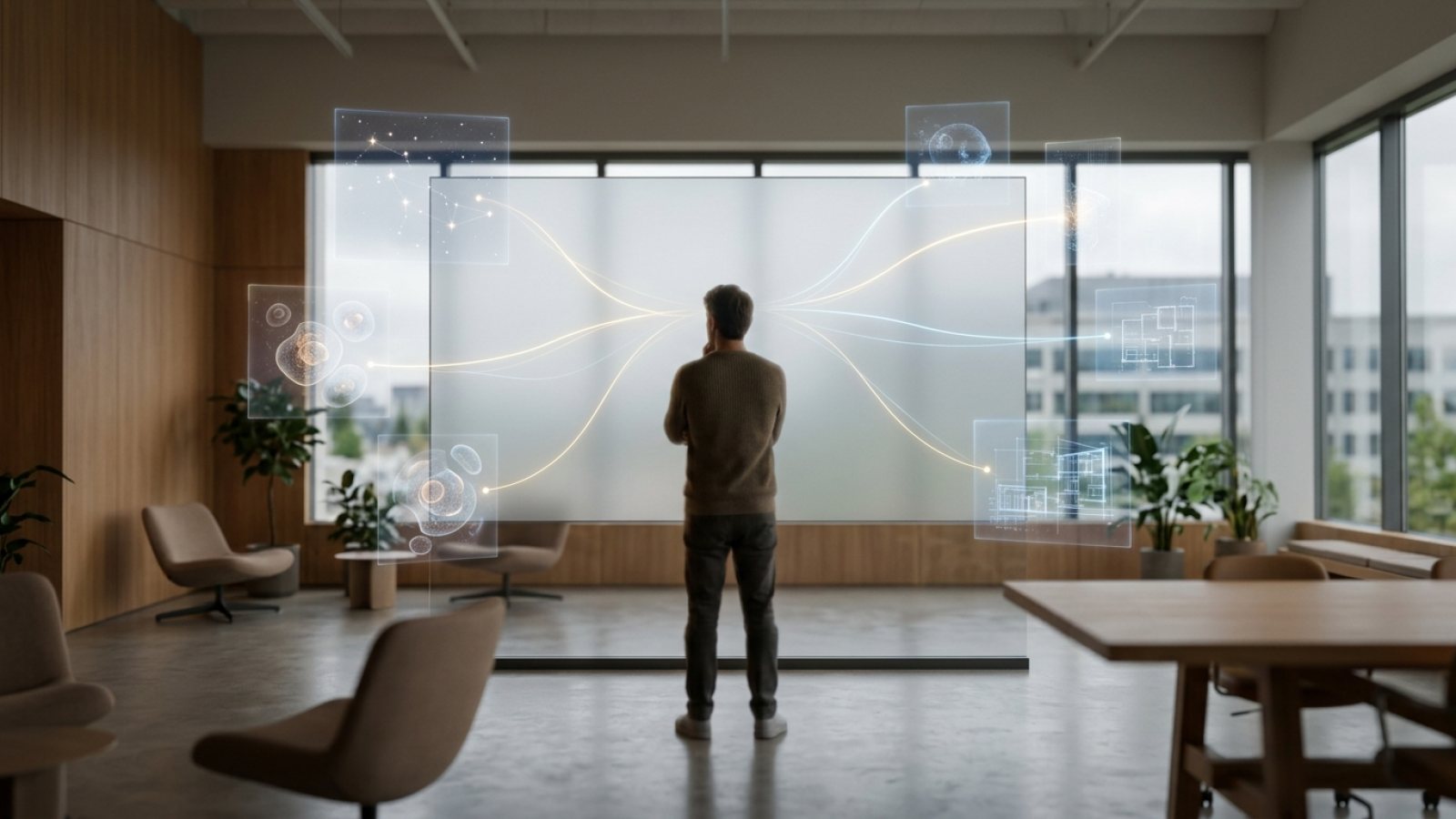
AI does not replace human ingenuity; it amplifies it. For those who instinctively see connections across disparate fields, AI is the ultimate lens, revealing insights others might miss.
True insight often begins not with an answer, but with a surprising connection. Some minds are wired to see these connections, to detect patterns in the noise, to link seemingly unrelated ideas across disciplines.
This way of thinking has always been powerful. With artificial intelligence, it becomes essential. AI does not replace human ingenuity; it amplifies it. For those who instinctively see patterns, AI is the ultimate lens.
Connecting the Unconnected
Our world is awash in data, but data alone is not knowledge. Knowledge comes from understanding relationships. Human brains are exceptional at this, building mental models from experience. AI tools extend this capability by processing information at a scale and speed no human could match.
Consider a designer working on an interface for a new app. They might naturally think about how people interact with physical objects, or how a good story unfolds. An AI assistant can quickly surface user feedback patterns from wildly different product categories, or highlight interaction successes from gaming platforms and educational software. The AI provides the raw connections. The pattern-seeking human mind sees how those connections apply to the app, forging new possibilities.
It is about more than just finding statistical correlations. It is about understanding the underlying forces. A human can ask: Why are these two things connected? What principle binds them? AI offers the data points; people offer the wisdom.
The Habit of Adjacent Leverage
At BrightBorn AI, one of our core habits is to find the adjacent leverage. This means looking for the answer to a problem in one field by exploring the next field over. AI is a perfect partner for this.
Imagine a team trying to optimize logistical routes for a delivery service. Traditionally, they might focus on traffic data, vehicle capacity, and delivery windows. A pattern-seeking mind, using AI, might look for connections to urban planning, fluid dynamics, or even the migratory patterns of animals. The AI can process vast amounts of data from these adjacent fields, identifying surprising efficiencies or bottlenecks that a human might not have considered. The human then interprets these insights, translating a biological principle into a practical delivery strategy.
This is where creativity truly shines: putting things side by side that nobody put together before. AI helps us discover those unexpected pairings, offering a broader canvas for our intuition.
The Bigger Picture is Human
While AI can identify complex patterns in vast datasets, it cannot inherently understand their meaning or significance. That requires human consciousness, context, and judgment. We apply our values and goals to the patterns AI reveals. We choose which connections matter, and which actions to take.
This is why an AI-native approach always keeps a person in charge of every decision. The tools are part of the thinking itself, integrated from the start, but they serve human intentionality. Our job is to cultivate the human minds that can truly see the bigger picture – the ones that can look beyond the obvious outputs of an AI and ask deeper questions.
AI is not a substitute for intelligence; it is an amplifier for it. For those who naturally look for the threads that weave through different domains, AI offers an unprecedented ability to draw those threads together, creating a richer, more nuanced understanding of the world.
Take it a level higher
Consider these questions and experiments this week:
- What unrelated piece of information or insight from a different field could shed light on a problem you are currently facing?
- Next time you use an AI assistant, try asking it to identify patterns between two topics you would never typically connect.
- Reflect on a time you solved a problem by seeing an unexpected connection. How might AI have accelerated or deepened that discovery?
Written with AI tools at BrightBorn AI, where a person stays in charge.
